
Home » Pest Library » Social Wasps
Social Wasps Lethbridge
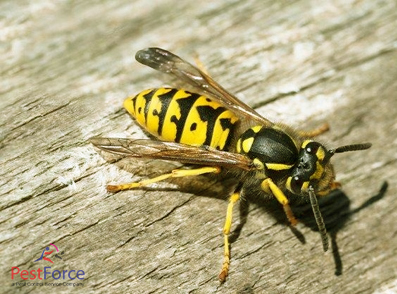
Wasps are flying insects belonging to the order Hymenoptera, typically recognized by their slim bodies, narrow waists, and vibrant yellow-and-black markings. Unlike bees, wasps have smooth bodies with minimal hair and elongated legs. Their wings fold lengthwise when at rest, and they have large, compound eyes that aid in detecting movement.
Wasps can be social or solitary. Social wasps, like yellow jackets and paper wasps, live in colonies with a queen, workers, and drones, while solitary wasps nest alone. They build nests from chewed wood fibers mixed with saliva, forming papery structures in trees, attics, or under eaves.
Wasps are omnivorous, feeding on nectar, insects, and carrion. Unlike bees, they can sting multiple times without dying, making them more aggressive when threatened. They play a crucial ecological role by pollinating plants and controlling insect populations, but large infestations near homes or businesses can pose serious risks.
Scientific Name
Hymenoptere/Vespidae
Signs of a Wasp Infestation in Lethbridge
If you suspect a wasp problem on your property, look for these common signs of an infestation:
- Increased Wasp Activity – A noticeable rise in wasps flying around your home or yard, especially near eaves, trees, or bushes, often signals a nearby nest.
- Noticeable Nests – Wasps build umbrella-shaped nests with honeycomb chambers in sheltered areas such as under eaves, in trees, inside walls, or even underground.
- Buzzing Noises – If you hear a persistent buzzing noise from confined spaces or walls, there may be a hidden nest inside your home.
- Hostile Behavior – Wasps can become defensive and attack if they feel threatened, especially when their nest is disturbed.
- Property Damage – Some wasps chew on wood and other materials to construct their nests, leading to minor structural damage.
Lethbridge Wasp Prevention Tips
- Seal Entry Points – Close cracks and gaps in walls, siding, and roofs.
- Avoid disturbing the nest – Do not attempt to remove nests without professional help.
- Maintain clean Landscaping – Trim overgrown shrubs and remove potential nesting spots.
- Seal Garbage – Use tightly closed bins to prevent attraction.
- Cover Outdoor Food/Drinks – Wasps are drawn to sugary drinks and food.
- Use Wasp Traps – Strategically placed traps can help reduce their presence.
For expert wasp control in Lethbridge, trust Pest Force to eliminate infestations safely and effectively!
Frequently Asked Questions About Wasps
- Are wasps dangerous?
Yes, wasps can be dangerous, especially if provoked. Their stings are painful and can cause allergic reactions in some individuals. Unlike bees, wasps can sting multiple times, making them more aggressive when defending their nests. - How can I tell if I have a wasp infestation?
Common signs of an infestation include increased wasp activity around your property, visible nests under eaves or in trees, a persistent buzzing sound from walls or confined spaces, and aggressive wasp behavior when near a nesting site. - What attracts wasps to my home?
Wasps are attracted to sweet foods, open garbage, pet food, and nesting sites like sheltered corners, attics, and tree branches. Keeping food covered and sealing entry points can help prevent infestations. - Can I remove a wasp nest myself?
It is not recommended. Disturbing a wasp nest can provoke a swarm, leading to multiple stings. Professional Wasp control services, like ours, use safe and effective methods to remove nests without putting you at risk. - How can I prevent wasps from nesting on my property?
To deter wasps, seal cracks and holes in your home’s exterior, remove food sources, keep garbage bins sealed, trim overgrown vegetation, and use wasp deterrents like traps or decoy nests. Regular inspections can also help catch potential infestations early.


